
The United Kingdom may look small on a map, but it is packed with an incredible variety of places to explore. Historic cities, dramatic mountains, peaceful villages, sandy beaches, ancient castles and lively cultural centres can all be found within relatively short travelling distances. Whether you are planning your first visit or looking for inspiration for your next UK staycation, this guide will help you discover some of the best places to visit, things to do and useful travel tips.
From the famous streets of London to the mountains of Scotland and Wales, every part of the UK offers something different. The official VisitBritain tourism guide highlights destinations across England, Scotland, Wales and Northern Ireland, ranging from major cities to coastlines, countryside and national parks.
Why Visit the UK?
One of the best things about travelling around the UK is the amount of variety you can experience during a single trip.
You can spend your morning exploring a centuries-old castle, enjoy lunch in a traditional market town and finish your day walking beside a lake or relaxing on the coast.
History is everywhere. Roman remains, medieval streets, royal palaces, historic universities and industrial heritage sites help tell the story of Britain across thousands of years.
Nature lovers are equally well served. The UK has mountains, forests, national parks, islands, beaches and long-distance walking routes.
Food is another reason to travel. Each region has its own character, local dishes and traditions. You might enjoy fresh seafood beside the coast, afternoon tea in an English town, Welsh cakes in Wales or traditional Scottish dishes in Edinburgh.
Best Places to Visit in the UK
Choosing where to travel can be difficult because there are so many excellent destinations. These are some of the places that deserve a spot on a UK travel itinerary.
1. London
For many visitors, London is the natural starting point.
The capital combines world-famous landmarks with museums, neighbourhood markets, theatres, parks, restaurants and hundreds of years of history.
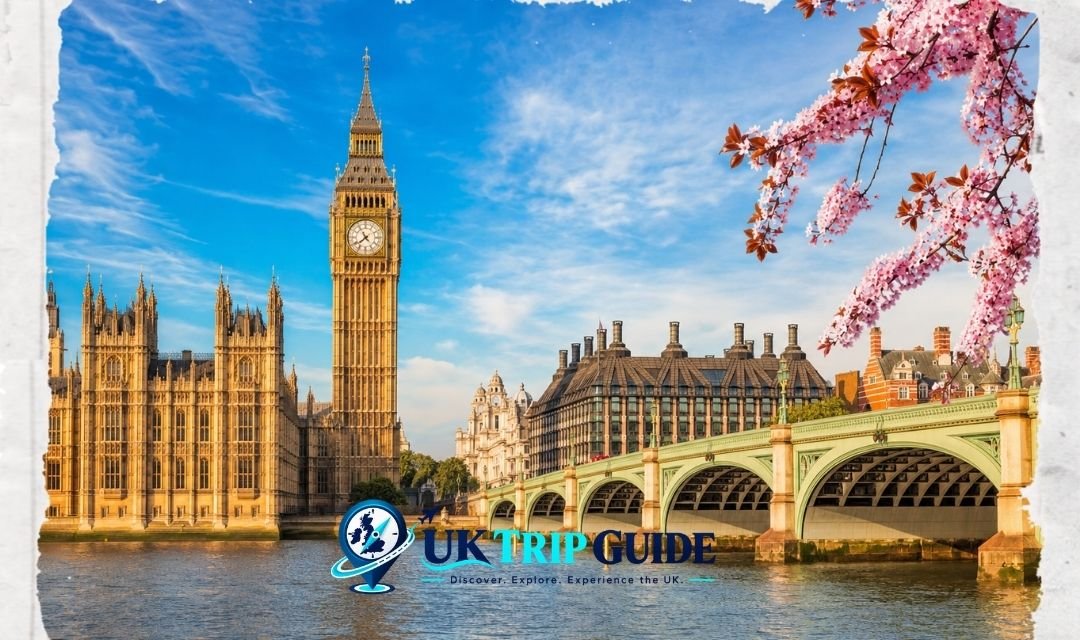
Some of London’s best-known sights include Big Ben, the Houses of Parliament, Buckingham Palace, Tower Bridge and the Tower of London.
However, London is much more than its famous landmarks.
Walk through colourful neighbourhoods such as Notting Hill, explore food stalls at Borough Market, enjoy the atmosphere around Covent Garden or spend a peaceful afternoon in Hyde Park.
Many major museums have permanent collections that can be visited without an admission fee, making London easier to explore even when travelling on a limited budget.
Best for:
First-time visitors, museums, history, shopping, theatre and food.
How long to stay:
Three to five days is a good starting point, although you could easily spend much longer.
2. Edinburgh
Edinburgh is one of the UK’s most impressive historic cities.
Its skyline is dominated by Edinburgh Castle, while the Old Town is filled with historic buildings, narrow lanes and atmospheric streets.
The Royal Mile leads through the heart of the historic centre, with shops, restaurants and attractions along the way.
For one of the best views over the city, visitors can walk up Arthur’s Seat. The climb requires some effort, but the views can make it worthwhile on a clear day.
Edinburgh is also known internationally for its festivals, especially during the summer months when the city becomes particularly lively.
Best for:
Castles, history, festivals, architecture and city breaks.
How long to stay:
Two to three days.
3. The Lake District
Travellers who prefer mountains, lakes and peaceful countryside should consider the Lake District.
Located in Cumbria in northwest England, this beautiful region is one of Britain’s most famous outdoor destinations.
Popular bases include Windermere, Ambleside, Keswick and Grasmere.
Visitors can spend their days walking beside lakes, hiking through the hills, taking boat trips or simply relaxing in a traditional village.
You do not have to be an experienced hiker to enjoy the Lake District. There are routes ranging from gentle lakeside walks to challenging mountain climbs.
Best for:
Walking, photography, romantic breaks, countryside and outdoor adventure.
How long to stay:
Three to four days.
4. The Cotswolds
When people imagine traditional English countryside, the picture in their mind often looks something like the Cotswolds.
Think stone cottages, small churches, country pubs, green fields and picturesque villages.
Popular places include Bourton-on-the-Water, Bibury, Stow-on-the-Wold and Castle Combe.
The Cotswolds are particularly enjoyable for travellers who prefer slower trips rather than busy sightseeing schedules.
Spend time walking through villages, stopping for coffee, browsing local shops and enjoying countryside views.
Best for:
Couples, village breaks, photography, countryside walks and relaxing weekends.
How long to stay:
Two to three days.
5. York
York is one of England’s most interesting historic cities.
Its compact centre makes it especially suitable for a weekend break.
York Minster is one of the city’s major landmarks, while the medieval streets around the centre are enjoyable to explore on foot.
The Shambles is perhaps York’s most photographed street, with narrow buildings and shopfronts giving visitors a glimpse of the city’s historic character.
York’s old city walls also provide an interesting way to see parts of the city from a different perspective.
Best for:
History, architecture, couples and weekend breaks.
How long to stay:
One to two days.
6. Bath
Bath offers something quite different from most British cities.
Famous for its Roman heritage and elegant Georgian architecture, it feels compact, attractive and easy to explore on foot.
The Roman Baths are its most famous historic attraction, but visitors should also make time for Bath Abbey, Pulteney Bridge and the Royal Crescent.
Simply walking around Bath can be one of the highlights of visiting because so much beautiful architecture is concentrated within the city centre.
Best for:
Roman history, architecture, romantic breaks and culture.
How long to stay:
One to two days.
7. Cornwall
Cornwall is one of Britain’s favourite coastal escapes.
Located in the southwest of England, the county offers fishing villages, dramatic cliffs, sandy beaches and some wonderful coastal walks.
St Ives is particularly popular for its beaches and artistic character, while places such as Padstow, Falmouth and Newquay offer different styles of seaside breaks.
For dramatic scenery, explore sections of Cornwall’s coastline on foot.
Summer brings the warmest weather but also the largest crowds, so late spring and early autumn can be attractive alternatives.
Best for:
Beaches, families, surfing, seafood and coastal holidays.
How long to stay:
Four to seven days.
8. Eryri (Snowdonia)
Wales is filled with impressive landscapes, and Eryri National Park — widely known in English as Snowdonia — is one of the most famous.
Mountains, lakes, valleys and villages make this an excellent destination for outdoor travellers.
Yr Wyddfa, also known as Snowdon, is the highest mountain in Wales and attracts large numbers of walkers.
But climbing the mountain is far from the only reason to visit.
Scenic drives, gentler walks, historic towns and beautiful lakes mean travellers of different fitness levels can enjoy the region.
Best for:
Hiking, mountains, adventure and scenic road trips.
How long to stay:
Two to four days.
9. Cardiff
The Welsh capital works well for travellers looking for a manageable city break.
Cardiff Castle sits in the heart of the city, while Cardiff Bay offers restaurants, waterfront walks and entertainment.
Sports fans may also know the city for its strong rugby culture.
Cardiff can be explored over a weekend and also makes a useful starting point for discovering more of South Wales.
Best for:
City breaks, castles, food, culture and sport.
How long to stay:
Two days.
10. The Scottish Highlands
If dramatic scenery is your main reason for travelling, the Scottish Highlands should be high on your list.
Mountains, glens, lochs and remote roads create some of the most memorable landscapes in the UK.
Glencoe is one of the best-known areas, while Loch Ness, Fort William and the wider Highlands provide countless opportunities for walking and road trips.
The Highlands are particularly well suited to travellers who have more than a weekend available because distances between destinations can be significant.
Best for:
Road trips, hiking, photography, wildlife and wild landscapes.
How long to stay:
Four to seven days or longer.
11. Belfast
Belfast has developed into an increasingly interesting destination for a short city break.
Northern Ireland’s capital has a strong maritime history, lively food scene and several cultural attractions.
The Titanic Quarter is one of the city’s most recognisable areas.
Belfast can also be used as a starting point for exploring the spectacular Causeway Coast.
Best for:
History, culture, food and weekend breaks.
How long to stay:
Two to three days.
12. Giant’s Causeway
The Giant’s Causeway is one of Northern Ireland’s most remarkable natural attractions.
Its distinctive coastal rock formations create a landscape unlike almost anywhere else in Britain.
A visit can easily be combined with a larger road trip along Northern Ireland’s northern coast.
Give yourself time not only to see the famous rocks but also to appreciate the cliffs and surrounding coastal scenery.
Best for:
Nature, photography, coastal scenery and road trips.
Best Things to Do in the UK
Travelling around Britain is not only about checking famous landmarks off a list. Some of the best experiences come from slowing down and experiencing the character of each place.
Visit a Historic Castle
You could build an entire UK holiday around castles.
England, Scotland, Wales and Northern Ireland all have impressive fortresses, ruins and royal buildings.
Some are surrounded by busy cities, while others sit beside mountains, rivers or remote coastlines.
Explore a National Park
Britain’s national parks provide an escape from its cities.
The Lake District, Peak District, Yorkshire Dales and Dartmoor are excellent options in England.
Scotland offers huge areas of wild landscape, while Wales has Eryri, the Brecon Beacons and Pembrokeshire Coast.
Choose walks based on your experience and always check local conditions before heading into mountainous areas.
Take a Scenic Train Journey
Travelling by train can become part of the experience itself.
Several railway routes pass through beautiful countryside, coastal landscapes and mountain regions.
Even ordinary intercity journeys can provide attractive views while saving travellers from having to drive.
Spend a Day at the Seaside
A British seaside trip is a classic experience.
Brighton is convenient from London, while Cornwall and Devon provide countless beaches further southwest.
North Yorkshire, Northumberland, Wales, Scotland and Northern Ireland also have beautiful stretches of coastline that are sometimes much quieter.
Discover Historic Villages
Do not focus only on major cities.
Smaller towns and villages often provide some of the most memorable UK travel experiences.
Spend an afternoon wandering through old streets, visit a local café and enjoy the slower atmosphere.
When Is the Best Time to Visit the UK?
There is no single perfect month because the best time depends on what you want to do.
Spring: March to May
Spring can be wonderful for countryside trips.
Gardens begin to bloom, daylight hours increase and popular attractions may be quieter than during the peak summer period.
The weather can still change quickly, so bring layers.
Summer: June to August
Summer usually offers long daylight hours and the largest selection of outdoor events.
It is also the busiest season.
Popular coastal destinations, national parks and major cities can become crowded, particularly during school holidays.
Booking accommodation in advance is sensible.
Autumn: September to November
Early autumn can be an excellent time for UK travel.
Crowds often reduce after the school summer holidays, while countryside areas become particularly attractive as the leaves change.
Days become shorter as the season progresses.
Winter: December to February
Winter suits travellers interested in Christmas markets, museums, cosy pubs and city breaks.
Countryside weather can be more challenging and daylight hours are shorter, particularly in Scotland.
However, accommodation may sometimes be better value outside major festive periods.
Getting Around the UK
The best form of transport depends on your itinerary.
By Train
Trains are convenient for travelling between many large cities.
Routes connect destinations such as London, York, Edinburgh, Manchester, Liverpool, Cardiff and Birmingham.
Booking ahead can sometimes provide better fares than purchasing tickets immediately before travelling.
By Car
Driving provides much more freedom when exploring rural areas.
A car is particularly useful for destinations such as the Cotswolds, Cornwall, the Scottish Highlands and remote areas of Wales.
Remember that vehicles drive on the left in the UK.
Country roads can also be much narrower than international visitors expect.
By Bus and Coach
Coaches are often cheaper than trains for longer journeys, although travel times can be greater.
Local buses can be extremely useful in cities and some countryside destinations.
On Foot
Many historic British cities are ideal for walking.
York, Bath, Oxford and central Edinburgh are examples where exploring on foot can often be more enjoyable than constantly using transport.
UK Travel Tips You Should Know
A little planning can make your trip far easier.
Check the weather regularly. British weather can change quickly, even during summer.
Carry a light waterproof jacket. It can be more useful than relying on an umbrella, particularly in windy areas.
Book popular accommodation early. This is especially important for summer trips to Cornwall, the Lake District, Edinburgh and other heavily visited destinations.
Allow extra travel time in rural areas. Roads may be narrow and public transport less frequent.
Wear comfortable footwear. Historic streets, countryside paths and hilly cities can involve far more walking than expected.
Do not rush your itinerary. Trying to see London, Edinburgh, Cornwall and the Highlands in a few days will leave you spending too much time travelling.
Explore beyond famous landmarks. Local markets, parks, small villages and neighbourhoods can often become the most enjoyable parts of a trip.
How Many Days Do You Need for a UK Trip?
For a first visit, seven to fourteen days provides a useful amount of time.
A one-week itinerary could focus on London plus two or three destinations in England.
With ten days, you could comfortably include England and Scotland or England and Wales.
Two weeks gives you more freedom to combine several regions without rushing.
For example:
Days 1–4: London
Days 5–6: Bath and the Cotswolds
Days 7–8: York
Days 9–11: Edinburgh
Days 12–14: Scottish Highlands
Travellers who already live in the UK may prefer shorter weekend trips, allowing them to explore one destination properly before moving on to another region on a future holiday.
Is the UK Good for a Road Trip?
Absolutely.
Some of Britain’s most beautiful areas are particularly enjoyable by car.
The Scottish Highlands are famous for dramatic driving routes, while Wales offers mountain roads and coastal scenery.
Cornwall, the Cotswolds, Northumberland and the Lake District also work well for road trips.
Avoid planning distances solely based on mileage. A relatively short rural journey can take longer than expected because roads may be narrow, winding or busy.
How to Travel Around the UK on a Budget
A UK holiday does not have to be expensive.
Book transport and accommodation early when possible.
Travel outside school holidays if your schedule allows.
Make use of free museums, public parks, walking trails and coastal paths.
Consider staying slightly outside famous tourist centres, where accommodation can sometimes be less expensive.
Eating every meal in restaurants can also increase costs quickly. Mixing restaurant meals with cafés, markets and supermarket lunches can make a noticeable difference.
Final Thoughts
The UK is an ideal destination for travellers who enjoy variety.
Few trips allow you to experience famous cities, remote mountains, ancient castles, quiet villages and beautiful coastlines without travelling enormous distances.
London and Edinburgh are excellent choices for city lovers. The Lake District and Scottish Highlands offer spectacular outdoor scenery. Cornwall provides classic seaside escapes, while York, Bath and the Cotswolds reveal a more historic and traditional side of England.
Wales combines castles with mountains and coastline, while Northern Ireland offers vibrant Belfast and the dramatic Causeway Coast.
You do not need to see everything in one journey. In fact, the best UK trips often focus on just one or two regions, giving you enough time to experience them properly.
Frequently Asked Questions
What is the best place to visit in the UK for first-time travellers?
London is usually the easiest starting point because it offers famous landmarks, museums, restaurants, entertainment and strong transport connections. Adding Edinburgh, Bath or York can provide a broader view of the UK.
What is the most beautiful part of the UK?
There is no single answer, but the Lake District, Scottish Highlands, Cornwall, the Cotswolds and Eryri are regularly considered among the country’s most scenic destinations.
How long should I spend travelling around the UK?
Seven days can work for a focused itinerary. Ten to fourteen days is better if you want to visit several different regions without constantly rushing.
Can you travel around the UK without a car?
Yes. Major cities and many popular destinations are connected by train, coach and local bus services. A car becomes more useful for remote countryside, small villages and certain coastal regions.
What month is best for visiting the UK?
May, June and September can be attractive choices because of longer daylight hours and generally fewer crowds than the busiest parts of July and August. Weather, however, can vary at any time of year.
Is the UK suitable for family holidays?
Yes. Families can choose from beaches, castles, museums, national parks, theme parks, wildlife attractions and countryside holidays throughout the country.
What should I pack for a UK holiday?
Comfortable walking shoes, layers, a waterproof jacket and a small day bag are useful throughout much of the year. Check the forecast shortly before travelling because conditions can change quickly.
Where should couples go for a romantic UK break?
The Cotswolds, Bath, Edinburgh, Lake District and Cornwall are all excellent choices for couples looking for attractive scenery, cosy accommodation and relaxing days out.
Is it better to visit UK cities or the countryside?
Ideally, experience both. Combining a city such as London, Edinburgh or York with a countryside destination such as the Lake District or Cotswolds creates a much more varied trip.
Do UK tourist attractions need to be booked in advance?
Some popular paid attractions can become busy, especially during weekends, summer and school holidays. When visiting a ticketed attraction, check its official website before travelling for current opening hours, prices, availability and booking requirements.
Ready to discover more beautiful destinations, hidden gems and practical travel ideas across Britain? Explore your next adventure at UKTripGuide.co.uk.