
Cotswolds Travel Guide readers looking for beautiful English villages, rolling countryside, honey-coloured cottages and peaceful weekend escapes will find plenty to love in this famous part of England. From the riverside beauty of Bourton-on-the-Water to the storybook streets of Castle Combe and Bibury, the Cotswolds feels like a collection of picture-perfect villages brought to life.
The Cotswolds covers almost 800 square miles across five counties and offers more than 3,000 miles of footpaths and bridleways, according to the region’s official tourism guide. That means there is far more here than a few famous villages. Travellers can discover market towns, country pubs, walking trails, gardens and quieter rural communities throughout the region.
This Cotswolds Travel Guide will help you discover the most beautiful villages and places to visit, when to go, where to stay and how to plan an unforgettable countryside break.
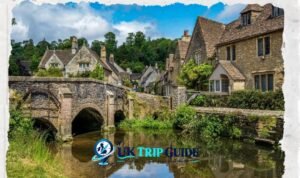
Why Visit the Cotswolds?
The Cotswolds is one of the best destinations in the UK when you want to slow down.
There are no skyscrapers to rush between and no enormous list of landmarks that must be completed before sunset. Instead, the pleasure comes from walking through old villages, stopping at small cafés, enjoying countryside views and travelling along roads surrounded by green fields and stone walls.
The region is famous for its warm-coloured limestone buildings. Many villages have cottages, churches and old inns made from the same local stone, giving the entire area a distinctive look.
It is also wonderfully varied.
Couples can book a romantic countryside weekend. Families can explore villages and walking trails. Photographers will find beautiful scenes around almost every corner, while solo travellers can spend peaceful days exploring at their own pace.
1. Bourton-on-the-Water
Bourton-on-the-Water is one of the most famous places in the Cotswolds.
The River Windrush flows through the centre of the village beneath several low stone bridges, creating one of the area’s most recognisable scenes.
It is sometimes called the Venice of the Cotswolds because of its riverside setting.
The best activity here is surprisingly simple: walk.
Follow the river, cross the small bridges and explore the surrounding streets. Cafés, traditional buildings and green spaces make it easy to spend several relaxed hours here.
Bourton becomes extremely popular during sunny weekends and school holidays.
Arriving early in the morning can completely change your experience. The village feels much calmer before large numbers of day visitors arrive.
Best for: First-time visitors, families, photography and couples.
Ideal visit: Half a day.
2. Bibury
Bibury is another village that regularly appears in photographs of the Cotswolds.
Its most famous feature is Arlington Row, a line of historic stone cottages beside the water.
The cottages, green surroundings and River Coln create one of the most beautiful village scenes in England.
Bibury is small, so you do not need an entire day.
Allow enough time to walk through the village, enjoy the riverside scenery and explore without rushing.
The biggest mistake is arriving at the busiest time of day during summer.
Come early in the morning or later in the afternoon if possible.
Bibury is a real village where people live, so visitors should avoid blocking houses, driveways or narrow roads while taking photographs.
Best for: Photography, couples and classic Cotswolds scenery.
Ideal visit: Two to three hours.
3. Castle Combe
Castle Combe looks like something from a storybook.
Honey-coloured cottages line the main street as it descends towards a small stone bridge and stream.
There are very few modern-looking buildings to interrupt the historic atmosphere.
The village is tiny, which is part of its charm.
You can walk from one end to the other fairly quickly, but there is no reason to rush.
Stop near the bridge, explore the streets and notice the small architectural details around the cottages.
Castle Combe works particularly well as part of a wider road trip through the southern Cotswolds.
Because the village itself has limited space, use recognised parking areas and walk into the historic centre rather than trying to drive through every narrow street.
Best for: Couples, photographers and romantic day trips.
Ideal visit: Two to three hours.
4. Stow-on-the-Wold
Stow-on-the-Wold offers something slightly different from the tiny villages.
It is an old market town located on higher ground in the northern Cotswolds.
Its central square is surrounded by historic buildings, independent shops, cafés and traditional inns.
That makes Stow particularly useful when you want to combine sightseeing with lunch or shopping.
Walk around the market square before exploring the smaller surrounding streets.
The town is also conveniently positioned for reaching Bourton-on-the-Water, the Slaughters and other popular villages.
This makes it one of the strongest choices for accommodation if you want to explore several parts of the northern Cotswolds.
Best for: Shopping, history, food and a central base.
Ideal visit: Half a day or an overnight stay.
5. Chipping Campden
Chipping Campden is one of the most attractive market towns in the Cotswolds.
Its long historic High Street is lined with beautiful stone buildings that reflect the area’s wealthy wool-trading past.
The town has an elegant but relaxed atmosphere.
Spend your morning walking through the centre, browsing independent shops and enjoying the architecture.
Chipping Campden is also a particularly good destination for walkers.
The famous Cotswold Way begins or ends here, depending on the direction you travel.
You do not have to complete the entire long-distance route. Even a shorter countryside walk outside town can provide beautiful views.
Best for: Walking, history, couples and architecture.
Ideal visit: Half a day to one night.
6. Broadway
Broadway has one of the most attractive main streets in the northern Cotswolds.
Wide streets, old stone buildings, restaurants, shops and nearby countryside make it an excellent stop on a village road trip.
It feels polished but still retains traditional Cotswolds character.
Walk through the village before heading into the surrounding countryside.
Broadway also makes a good base if you want to stay somewhere with restaurants and facilities while still having easy access to rural scenery.
Couples may particularly enjoy staying overnight because the village becomes calmer once many daytime visitors have left.
Best for: Couples, restaurants, walking and weekend breaks.
Ideal visit: Half a day or overnight.
7. Lower Slaughter
Do not let the unusual name put you off.
Lower Slaughter is one of the prettiest small villages in the Cotswolds.
The River Eye runs through the village beside traditional stone cottages, giving it a peaceful and romantic atmosphere.
There is far less to “do” here than in Bourton-on-the-Water.
That is exactly why many people love it.
Walk beside the river, admire the cottages and enjoy the countryside.
Lower Slaughter is also close enough to Upper Slaughter that the two villages can be combined on foot by travellers who enjoy walking.
Visiting early or later in the day can make the experience even more peaceful.
Best for: Couples, walking and photography.
Ideal visit: One to two hours.
8. Upper Slaughter
Upper Slaughter is quieter than many famous Cotswolds villages.
It does not have a busy shopping centre or a long collection of tourist attractions.
Instead, visitors come for the old cottages, peaceful surroundings and countryside.
Combining Upper and Lower Slaughter creates one of the nicest slow-travel experiences in the area.
Rather than driving between them, consider walking if conditions and your mobility allow.
The journey gives you a chance to experience the countryside instead of seeing everything through a car window.
Best for: Quiet escapes, walking and couples.
Ideal visit: One to two hours.
9. Burford
Burford is often described as a gateway to the Cotswolds.
Its sloping High Street is lined with traditional buildings, shops, pubs and cafés.
Compared with very small villages such as Bibury, Burford offers more places to eat and browse.
That makes it a convenient stop around lunchtime.
Walk down the main street and explore the quieter lanes around it rather than remaining only along the busiest road.
Burford can also work well as a base if you want access to the eastern side of the Cotswolds.
Best for: Shopping, food, couples and first-time visitors.
Ideal visit: Half a day.
10. Painswick
Painswick provides an excellent alternative when you want classic Cotswolds beauty without visiting only the best-known northern villages.
The village has narrow streets, historic stone houses and attractive countryside nearby.
Its location also makes it useful for travellers exploring the southern and central parts of the region.
Walking is one of the best reasons to come here.
Rather than simply photographing the village and leaving, spend time on one of the surrounding countryside routes.
Painswick feels particularly attractive in spring and early summer when gardens and rural landscapes are at their brightest.
Best for: Walkers, couples and quieter Cotswolds trips.
Ideal visit: Half a day.
11. Tetbury
Tetbury is a historic market town known for attractive architecture and independent shops.
It provides a more relaxed alternative to some of the Cotswolds’ busiest tourism centres.
Antique shops and boutiques make Tetbury especially enjoyable if shopping is part of your trip.
But you should also spend time exploring its streets and surrounding countryside.
The town is a strong base for travellers who want to discover the southern Cotswolds rather than concentrating entirely around Bourton and Stow.
Best for: Shopping, couples, architecture and relaxed weekends.
Ideal visit: Half a day to one night.
12. Winchcombe
Winchcombe deserves more attention from first-time visitors.
The historic market town combines traditional streets with excellent access to countryside walking.
It has enough cafés, shops and accommodation to make staying overnight convenient.
Walkers may particularly enjoy using Winchcombe as a base because several countryside routes are accessible around the town.
It is a good example of why a Cotswolds holiday should include more than the three or four villages that dominate social media photographs.
Best for: Walking, history and slower travel.
Ideal visit: Half a day or overnight.
13. Cirencester
Cirencester is larger than the storybook villages, but it deserves a place in a complete Cotswolds Travel Guide.
The historic market town provides restaurants, shops and useful services alongside plenty of character.
It can be a particularly practical base for a longer trip.
Instead of staying in an isolated village where evening options are limited, travellers can use Cirencester as a comfortable centre and take day trips throughout the surrounding countryside.
Its history stretches back to Roman Britain, giving history lovers another reason to visit.
Best for: Longer stays, restaurants, shopping and history.
Ideal visit: Half a day to two nights.
Best Things to Do in the Cotswolds
Village hopping may be the most famous activity, but it should not be your entire holiday.
Walking is one of the best ways to experience the countryside.
Even a simple route between neighbouring villages allows you to see stone walls, farmland, woodland and landscapes that people rushing between car parks often miss.
Eating is another important part of a Cotswolds trip.
Traditional pubs, tea rooms, bakeries and independent cafés can turn lunch into part of the experience.
Photography is almost unavoidable.
The warm stone buildings look particularly attractive during early morning and late afternoon when sunlight becomes softer.
Most importantly, allow yourself time to do nothing.
Sit beside a river. Enjoy coffee outside a village café. Walk through a quiet lane without worrying about reaching another attraction.
That slower pace is one of the biggest pleasures of visiting.
Best Cotswolds Villages for Couples
Castle Combe, Lower Slaughter, Broadway and Bibury are particularly attractive for romantic trips.
Castle Combe provides storybook architecture and peaceful streets.
Lower Slaughter feels quiet and rural.
Broadway offers more restaurants and accommodation, making it easier to plan a full weekend.
Bibury is beautiful for photography and a relaxed morning walk.
For an anniversary or special trip, consider staying overnight rather than visiting only as part of a rushed day tour.
Best Cotswolds Places for Families
Bourton-on-the-Water is one of the easiest starting points for families because it offers riverside scenery alongside plenty of nearby facilities.
Larger towns such as Cirencester also work well because food, accommodation and practical services are easier to find.
Families with older children may particularly enjoy countryside walks between villages.
Avoid trying to visit six or seven villages in one day.
Children will usually enjoy the trip more if there is time to walk, eat and relax rather than repeatedly getting in and out of the car.
Getting Around the Cotswolds
A car provides the greatest flexibility.
Many beautiful villages are separated by rural roads, and public transport does not connect every small community conveniently.
However, driving requires patience.
Country lanes can be narrow. Parking in famous villages can fill quickly, and roads were not designed for huge numbers of tourism vehicles.
Starting early helps.
It is also worth choosing one geographic area each day rather than driving from the northern Cotswolds to the far south and back again.
Travellers without cars can still enjoy the region.
Moreton-in-Marsh is one of the better-connected railway towns, and buses and organised tours can help visitors reach surrounding villages.
Plan transport before choosing accommodation if you will not have a vehicle.
A Perfect 2-Day Cotswolds Itinerary
On your first day, focus on the northern Cotswolds.
Start early at Bourton-on-the-Water before the busiest crowds arrive.
Continue to Lower Slaughter and enjoy a peaceful walk around the village.
Spend your afternoon in Stow-on-the-Wold before finishing around Broadway or Chipping Campden.
For day two, explore a different part of the region.
Start with Bibury early in the morning, continue towards Burford and then explore another nearby town or countryside walk.
If Castle Combe is particularly important to you, consider giving the southern Cotswolds its own day rather than squeezing it into a packed northern itinerary.
How Many Days Do You Need in the Cotswolds?
One day is enough to see a few famous villages, but it is not enough to properly experience the region.
Two nights provide a good introduction.
Three to four nights are even better.
With several days, you can mix famous villages with quieter places and countryside walks.
You also avoid spending your entire holiday racing between car parks.
If you are combining the Cotswolds with Bath, Oxford or another nearby destination, four or five days across the wider region can create an excellent English countryside holiday.
Best Time to Visit the Cotswolds
Spring is one of the loveliest periods.
Gardens begin to bloom, the countryside becomes greener and daylight hours increase.
Summer provides warm-weather atmosphere and long evenings, but famous villages can become very crowded.
September is an excellent alternative.
The busiest school-holiday period has ended, while days can still be comfortable for walking.
Autumn colours also make the countryside particularly photogenic.
Winter provides a completely different experience.
Cold mornings, quiet villages and cosy pubs can make a romantic winter stay memorable, although daylight hours are much shorter.
Where to Stay in the Cotswolds
Choose your base according to your itinerary.
Stow-on-the-Wold works well for the popular northern villages.
Broadway is excellent for couples and walking.
Chipping Campden provides history and beautiful architecture.
Cirencester works particularly well if you prefer a larger town with more restaurants and services.
Tetbury is a strong option for the southern Cotswolds.
If your dream is to wake up in a tiny village, consider a countryside inn or cottage instead.
Always check whether accommodation includes parking when travelling by car.
Cotswolds Travel Guide Tips for First-Time Visitors
Do not visit only at midday.
Famous villages can feel completely different early in the morning.
Do not judge travel time only by distance. Narrow roads and busy villages can make short journeys slower than expected.
Wear comfortable footwear because walking is one of the best parts of visiting.
Carry a waterproof jacket because British weather can change quickly.
Download important route information before travelling into rural areas where phone reception may be less reliable.
Most importantly, remember that these beautiful villages are real communities.
Do not block driveways, enter private gardens or stand in the road for photographs.
Respectful travel makes the Cotswolds better for residents and visitors alike.
Is the Cotswolds Worth Visiting?
Yes, especially if you enjoy countryside, old architecture and slower travel.
Travellers expecting theme parks and nonstop entertainment may find the pace quiet.
But that is exactly the attraction.
The Cotswolds offers an opportunity to experience a softer side of England: village greens, stone cottages, country lanes, old pubs and rolling hills.
A good Cotswolds trip is not measured by how many villages you photograph.
It is measured by how much time you actually spend enjoying them.
Final Thoughts on This Cotswolds Travel Guide
This Cotswolds Travel Guide shows why the region remains one of the most beautiful countryside destinations in Britain.
Bourton-on-the-Water offers famous riverside views. Bibury provides the iconic cottages of Arlington Row, while Castle Combe feels like a village from another century.
Stow-on-the-Wold, Chipping Campden and Broadway provide attractive bases with shops, food and accommodation.
Lower and Upper Slaughter offer a quieter experience, while places such as Painswick, Tetbury and Winchcombe prove that there is much more to the Cotswolds than its most photographed villages.
The best advice is simple: slow down.
Visit fewer places, walk more and allow yourself time to enjoy the countryside between them.
That is when the Cotswolds becomes much more than a collection of pretty photographs.
Frequently Asked Questions
What are the most beautiful villages in the Cotswolds?
Bourton-on-the-Water, Bibury, Castle Combe, Lower Slaughter, Broadway and Chipping Campden are among the most beautiful and popular choices.
What is the best Cotswolds village for first-time visitors?
Bourton-on-the-Water is a good starting point because it has classic Cotswolds scenery, riverside walks, cafés and convenient access to other nearby villages.
Is Bibury worth visiting?
Yes. Arlington Row and the River Coln make Bibury extremely picturesque. Visit early or later in the day if you want to avoid the busiest periods.
Is Castle Combe in the Cotswolds?
Yes. Castle Combe lies in Wiltshire in the southern part of the Cotswolds and is famous for its beautifully preserved stone cottages and village setting.
How many days should I spend in the Cotswolds?
Two days provide a useful introduction, while three to four days allow you to explore different areas and include countryside walks without rushing.
Do I need a car in the Cotswolds?
A car makes exploring smaller villages much easier. However, travellers can also use trains, buses and organised tours when staying near better-connected towns.
What is the best time to visit the Cotswolds?
May, June and September are excellent choices for many travellers because of longer daylight hours and generally better opportunities for walking without the very busiest summer crowds.
Where should couples stay in the Cotswolds?
Broadway, Stow-on-the-Wold, Castle Combe and smaller countryside villages are excellent options for romantic breaks.
Can you visit the Cotswolds in one day?
Yes, but you should choose only two or three nearby villages. Trying to see the entire region in one day will leave you spending too much time driving.
What should I not miss on my first Cotswolds trip?
Bourton-on-the-Water, Bibury, one quieter village such as Lower Slaughter, a historic market town and at least one countryside walk provide a great introduction.
Looking for more beautiful villages, countryside escapes, seaside towns and unforgettable places across Britain? Explore more travel inspiration at UKTripGuide.co.uk