
Scotland Travel Guide readers looking for historic cities, beautiful islands, mysterious lochs and dramatic mountain scenery will find almost endless places to explore. Scotland can take you from the medieval streets of Edinburgh to the wild landscapes of the Highlands, then across the sea to islands filled with beaches, cliffs and peaceful villages.
Scotland has eight official cities, hundreds of islands and some of Britain’s most impressive natural landscapes. Edinburgh and Glasgow are perfect for culture and city breaks, while Inverness acts as a gateway to the Highlands. Travellers looking for something wilder can explore the Isle of Skye, Arran, Orkney or the Outer Hebrides.
This complete Scotland Travel Guide covers the best cities, islands, scenic places, attractions, road trips and practical travel tips for planning an unforgettable Scottish adventure.
Why Visit Scotland?
Scotland is one of the best destinations in the UK when you want several different holidays in one trip.
You can explore a castle in Edinburgh, listen to live music in Glasgow, walk beside Loch Ness, drive through Glencoe and then take a ferry to an island surrounded by the Atlantic Ocean.
The landscapes are one of Scotland’s biggest attractions.
The Highlands contain mountains, glens, forests, lochs and long stretches of wild coastline. VisitScotland describes the Highlands as a region filled with hiking routes, historic villages, rugged coastlines and scenic driving itineraries.
Scotland is also excellent for slower travel.
You do not need to visit ten attractions every day. Some of the best experiences involve driving through the countryside, walking beside a loch or spending an evening in a small Highland town.
Best Cities to Visit in Scotland
1. Edinburgh
Edinburgh is the obvious starting point for many first-time visitors.
Scotland’s capital combines dramatic architecture, royal history, museums, restaurants and some surprisingly beautiful natural scenery.
The Old Town is the historic heart of Edinburgh.
Walk along the Royal Mile and you will pass narrow lanes, stone buildings and centuries of history before eventually reaching Edinburgh Castle.
The New Town offers a different experience with elegant Georgian architecture, shopping streets and attractive squares.
For a beautiful view across the city, walk up Calton Hill.
Travellers wanting a bigger outdoor adventure can climb Arthur’s Seat when conditions are suitable.
Edinburgh is also extremely walkable. VisitScotland notes that Scottish cities are generally easy to explore on foot, which makes them particularly suitable for short breaks.
Best for: First-time visitors, couples, history and culture.
Ideal stay: Three nights.
Edinburgh Castle Ticket Information
Edinburgh Castle is one attraction worth planning ahead.
The castle sits at the top of the Royal Mile and is one of Scotland’s most famous historic sites.
As of August 2026, standard online admission is £23.50 for adults aged 16–64, £19 for concessions aged 65+ or unemployed, and £14 for children aged 7–15. Walk-up tickets cost more.
Family tickets and flexible tickets are also available.
Tickets can sell out far in advance, particularly during summer, so booking online before arriving is strongly recommended. Once online tickets are sold out, the castle says no additional tickets are available at the entrance.
For the latest prices, times and guaranteed official tickets, use the official Edinburgh Castle ticket page.
Opening hours vary by season, and the final admission is one hour before closing. The castle closes on 25 and 26 December.
2. Glasgow
Glasgow feels noticeably different from Edinburgh.
While Edinburgh is famous for medieval streets and castles, Glasgow is known for music, art, architecture, shopping and a lively food scene.
The city has a strong creative personality.
Live music is particularly important here, and Glasgow is recognised as a UNESCO City of Music.
Travellers can explore museums and galleries, walk through the West End and spend time around independent restaurants and cafés.
Glasgow also makes an excellent starting point for journeys towards Loch Lomond, the west coast and several Scottish islands.
Best for: Music, nightlife, food, museums and friends.
Ideal stay: Two to three nights.
3. Inverness
Inverness is often called the capital of the Highlands.
The city itself is smaller and quieter than Edinburgh or Glasgow, but its location makes it extremely useful.
From Inverness, travellers can explore Loch Ness, Culloden, Highland countryside and road-trip routes heading towards Scotland’s far north and west.
Walk beside the River Ness before exploring the compact city centre.
Inverness is particularly useful if you want to combine a comfortable city base with day trips into much wilder scenery.
Best for: Highlands trips, Loch Ness and road trips.
Ideal stay: Two nights.
4. Aberdeen
Aberdeen sits on Scotland’s northeast coast and has a distinctive appearance because many buildings were constructed from granite.
The city offers museums, historic architecture and easy access to Aberdeenshire’s coastline and countryside.
It is a good destination for returning visitors who have already explored Edinburgh and Glasgow.
Aberdeenshire is also known for castles and dramatic coastal scenery, making Aberdeen a useful starting point for a longer northeast Scotland road trip.
Best for: Architecture, coastlines and road trips.
Ideal stay: Two nights.
5. Dundee
Dundee has developed into an interesting cultural destination.
VisitScotland highlights it as a UNESCO City of Design and notes that it is home to the UK’s only V&A museum outside London.
Its waterfront provides a modern contrast to Scotland’s historic cities.
Dundee also makes sense as part of an east coast itinerary involving Edinburgh, St Andrews and Aberdeen.
Best for: Design, museums, architecture and short breaks.
Ideal stay: One to two nights.
6. Stirling
Stirling is small, but its history is enormous.
The city sits between the Highlands and Lowlands and has played an important role in Scotland’s past.
Its historic centre and castle attract visitors, while the surrounding area contains landscapes linked to famous moments in Scottish history.
Because Stirling is relatively compact, it works well as a day trip or overnight stop.
Best for: Scottish history and short trips.
Ideal stay: One night.
Best Islands to Visit in Scotland
Scotland’s islands offer a completely different kind of holiday.
VisitScotland highlights Orkney and Shetland for history and culture, while Skye and the Inner Hebrides are especially known for dramatic landscapes and adventure.
7. Isle of Skye
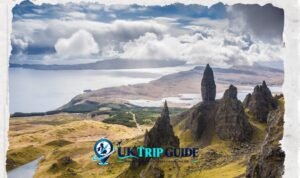
The Isle of Skye is one of Scotland’s most famous island destinations.
Its landscape includes sharp mountains, sea cliffs, waterfalls and remote roads.
The Old Man of Storr is one of the island’s most recognisable sights.
The Quiraing is another spectacular landscape, while the Fairy Pools attract visitors wanting to experience Skye’s mountain scenery more closely.
Portree is the island’s main town and makes a useful base.
Skye can become extremely busy during summer, so accommodation should be booked early.
Do not try to see the entire island in one day.
Give yourself at least two or three nights.
Best for: Photography, hiking, couples and road trips.
Ideal stay: Three nights.
8. Isle of Arran
Arran is sometimes described as offering a little of everything Scotland has in one island.
You can find mountains, forests, beaches, coastline and small communities within a relatively manageable area.
VisitScotland describes Arran as an island with dramatic peaks, changing coastline, sheltered beaches and outdoor adventures.
Cycling is particularly popular.
Arran can also work well for travellers who want an island experience without committing to a very long expedition into Scotland’s far north.
Best for: Couples, cycling, walking and short island trips.
Ideal stay: Two to four nights.
9. Isle of Mull
Mull combines mountains, coastline, wildlife and attractive communities.
Tobermory is perhaps the island’s most recognisable town, with colourful buildings around the waterfront.
Elsewhere, the island feels much wilder.
Mull can be particularly rewarding for travellers interested in wildlife and scenic driving.
Allow time for narrow island roads and avoid creating an itinerary that requires constant rushing.
Best for: Wildlife, photography and peaceful road trips.
Ideal stay: Three to five nights.
10. Outer Hebrides
The Outer Hebrides provide some of Scotland’s most remote-feeling island experiences.
White sandy beaches, turquoise water, wild coastline and Gaelic culture make these islands very different from mainland city breaks.
Lewis and Harris are among the best-known areas.
Luskentyre is famous for its remarkable beach scenery.
The Outer Hebrides have also gained international attention for their landscapes, with VisitScotland noting their appearance in National Geographic’s travel recommendations.
This is a destination that deserves time.
Travelling between islands can involve ferries, so build flexibility into your schedule.
Best for: Beaches, photography, slow travel and remote escapes.
Ideal stay: Five days or longer.
11. Orkney
Orkney is particularly interesting for travellers who love ancient history.
The islands contain remarkable prehistoric sites, dramatic coastlines and peaceful communities.
Standing stones and ancient settlements provide a direct connection with people who lived here thousands of years ago.
VisitScotland includes Orkney among Scotland’s islands particularly known for fascinating history and culture.
The islands also have impressive wildlife and coastal scenery.
Best for: Archaeology, history, wildlife and photography.
Ideal stay: Three to five nights.
Most Scenic Places in Scotland
12. Glencoe
Glencoe is one of the most dramatic landscapes in Scotland.
High mountains rise on either side of a deep valley, creating a journey that feels spectacular even when you remain close to the road.
But Glencoe deserves more than a quick photograph.
Take time to stop at safe viewpoints and consider one of the area’s walking routes if your experience and weather conditions allow.
Clouds and rain can actually make the valley look even more dramatic.
Best for: Road trips, mountains, walking and photography.
13. Loch Ness
Loch Ness is famous around the world because of stories about the mysterious Loch Ness Monster.
But even without Nessie, the loch is worth seeing.
The long stretch of dark water sits among beautiful Highland scenery.
Nearby Inverness provides a convenient base, while the ruins of Urquhart Castle create one of the most famous views across the loch.
VisitScotland recommends Loch Ness for walking, cycling, waterfalls and other outdoor experiences as well as its famous legend.
Best for: Families, scenery and first-time Highlands visitors.
14. Cairngorms National Park
Cairngorms National Park is one of the best places in Scotland for outdoor adventures.
Mountains, forests, rivers and wildlife provide opportunities throughout the year.
Aviemore is a popular base.
During warmer months, walking and cycling are among the main activities.
Winter can bring snow and opportunities for winter sports, although conditions should always be checked carefully.
VisitScotland describes the Cairngorms as the UK’s largest national park and highlights watersports, snowsports and wildlife watching among its activities.
Best for: Families, wildlife, hiking and outdoor adventure.
15. Loch Lomond and the Trossachs
Loch Lomond is much easier to combine with Glasgow than many remote Highland destinations.
That makes it a good introduction to Scottish countryside for travellers with limited time.
The loch is surrounded by hills and villages, while nearby Trossachs landscapes provide excellent walking and road-trip opportunities.
A two-night stay can offer a relaxing break after several days in Edinburgh or Glasgow.
Best for: Couples, families and first-time nature trips.
16. Glenfinnan
Glenfinnan is famous for its sweeping railway viaduct surrounded by Highland scenery.
The location has become particularly well known because of its appearance in Harry Potter films.
Even without that connection, the surrounding mountains and loch make Glenfinnan beautiful.
Parking can become busy, so plan ahead and never stop unsafely on surrounding roads simply to take photographs.
Best for: Photography, rail enthusiasts and film fans.
Best Scotland Road Trip
One of the best ways to explore Scotland is by car.
A simple first road trip could begin in Edinburgh before travelling north towards the Highlands.
Try this route:
Edinburgh → Stirling → Glencoe → Fort William → Glenfinnan → Isle of Skye → Inverness → Cairngorms → Edinburgh
Allow at least seven days.
Ten days would be much better.
Scotland’s roads can make distances feel longer than they appear on a map, particularly in the Highlands and islands.
Single-track roads are common in remote areas.
Use passing places properly and allow local traffic to overtake when safe.
Never park inside a passing place.
A Simple 7-Day Scotland Itinerary
Day 1 – Edinburgh
Explore the Royal Mile, Old Town and Calton Hill.
Visit Edinburgh Castle if it is part of your plans.
Day 2 – Edinburgh to Glencoe
Leave the city and travel west towards some of Scotland’s most impressive mountain landscapes.
Stay around Glencoe or Fort William.
Day 3 – Glenfinnan and the West Highlands
Explore the Fort William area before visiting Glenfinnan.
Spend time enjoying the scenery rather than rushing directly onwards.
Day 4 – Isle of Skye
Travel towards Skye and begin exploring the island.
Stay around Portree or another convenient base.
Day 5 – Isle of Skye
Give Skye a full day.
Choose only a few major locations instead of trying to circle the entire island.
Day 6 – Skye to Inverness
Travel east towards Inverness.
Stop at scenic viewpoints along the journey and explore Loch Ness if time allows.
Day 7 – Cairngorms and Return
Travel through the Cairngorms before continuing south.
If your schedule allows, add several extra days rather than trying to complete Scotland too quickly.
Best Time to Visit Scotland
Spring
April and May can be excellent.
Days become longer, landscapes turn greener and some popular destinations are less crowded than in midsummer.
Summer
June through August provides very long daylight hours.
This is excellent for road trips and island exploration.
Summer is also the busiest period, particularly around Edinburgh, Skye and famous Highland locations.
Accommodation should be booked early.
Autumn
September and October bring beautiful colour to forests and Highland landscapes.
September can be particularly attractive because the largest summer crowds begin to disappear.
Winter
Winter provides dramatic scenery and cosy city breaks.
Edinburgh and Glasgow remain excellent choices.
Remote Highland journeys require much more planning because snow, ice, strong winds and short daylight hours can affect roads and walking conditions.
Travelling to Scotland’s Islands
Island travel requires more planning than an ordinary city break.
Many islands depend on ferry connections.
VisitScotland says spring and summer 2026 ferry information is available and recommends checking current ferry updates while planning island trips.
Do not build a schedule with no flexibility.
Weather can affect island transport.
If you are taking a car, booking ferry space ahead can also be important during busy periods.
Consider spending several nights on each island rather than travelling somewhere simply for a few hours.
Scotland Travel Guide for Couples
Scotland is one of Britain’s best romantic destinations.
Edinburgh provides historic streets and restaurants.
Skye offers wild scenery and remote accommodation.
Glencoe is excellent for couples who enjoy mountains and road trips.
Loch Lomond works particularly well for a shorter countryside escape.
Arran is another great option if you want a peaceful island break.
The most romantic trips usually involve fewer destinations and more time in each one.
Scotland Travel Guide for Families
Families can enjoy Scotland without completing difficult hikes.
Edinburgh has museums and historic attractions.
Loch Ness provides scenery and its famous monster story.
The Cairngorms offer outdoor activities, while Loch Lomond has plenty of space for relaxed countryside days.
Build plenty of stops into road trips when travelling with children.
A shorter route enjoyed properly is usually better than spending the entire holiday inside the car.
Scotland Travel Guide for Solo Travellers
Edinburgh and Glasgow are excellent starting points for a solo Scottish adventure.
Both cities provide plenty to see without needing a car.
Inverness is another useful base if you want to experience Highland scenery while retaining the convenience of a city.
More experienced solo travellers may enjoy island trips or longer walking holidays.
For remote outdoor adventures, make sure someone knows your plans and always prepare properly for changing conditions.
Important Scotland Travel Tips
Scottish weather can change very quickly.
Bring waterproof clothing even if the morning begins with sunshine.
If hiking, wear suitable footwear and choose routes that match your experience.
Do not underestimate Highland driving distances.
Twenty miles along a narrow road can take far longer than twenty miles on a motorway.
Book accommodation well ahead for Skye and other popular island destinations during summer.
Download maps before travelling into remote areas where mobile coverage may be weaker.
During warmer months, Highland midges can also be annoying, particularly in still and damp conditions. Carrying suitable insect repellent can make evenings outdoors much more comfortable.
Most importantly, respect local communities.
Do not block gates, roads or passing places.
Take litter away and follow signs around sensitive landscapes.
Is Scotland Expensive to Visit?
Scotland can suit different budgets.
Edinburgh accommodation can become expensive during major summer events.
Remote islands may also cost more because accommodation choices are limited.
However, many of Scotland’s greatest experiences are free.
Walking through Glencoe, enjoying Highland viewpoints, visiting beaches and exploring villages can cost very little.
Save money by travelling outside peak periods, booking accommodation early and mixing restaurant meals with simpler lunches.
How Many Days Do You Need in Scotland?
A weekend is enough for Edinburgh or Glasgow.
Four to five days can combine one city with a short Highlands trip.
Seven days allows you to see Edinburgh, Glencoe and part of the Highlands.
Ten to fourteen days is much better if you want cities, islands and scenic road trips.
If visiting places such as Skye, Mull, Orkney or the Outer Hebrides, resist the temptation to include every island in one holiday.
Scotland rewards slow travel.
Final Thoughts on This Scotland Travel Guide
This Scotland Travel Guide shows why Scotland is much more than a destination for castles and kilts.
Edinburgh provides history and atmosphere, while Glasgow offers music, culture and lively city life.
Inverness opens the door to the Highlands, and places such as Glencoe, Loch Ness and the Cairngorms reveal some of Britain’s most impressive natural scenery.
Then there are the islands.
Skye offers dramatic mountains and cliffs. Arran combines beaches and peaks, Mull provides wildlife and colourful Tobermory, while Orkney and the Outer Hebrides can feel like entirely different worlds.
You do not need to see everything on one holiday.
Choose a city, add one Highland region and perhaps one island.
Travel slowly, stop frequently and give Scotland’s landscapes enough time to make an impression.
That is often when the best Scottish memories are created.
Frequently Asked Questions
What are the best places to visit in Scotland for first-time travellers?
Edinburgh, Glencoe, Loch Ness, the Isle of Skye and the Cairngorms provide an excellent introduction to Scotland.
What is the best city to visit in Scotland?
Edinburgh is usually the strongest choice for first-time visitors because it combines historic architecture, famous attractions, restaurants and beautiful viewpoints.
Is Glasgow worth visiting?
Yes. Glasgow is particularly good for music, museums, shopping, food and nightlife and offers a noticeably different experience from Edinburgh.
What is the most beautiful Scottish island?
The Isle of Skye is one of the most dramatic, but Arran, Mull, Orkney and the Outer Hebrides all provide very different and beautiful island experiences.
How many days do I need in Scotland?
Seven days provide a good introduction. Ten to fourteen days are better if you want to combine cities, Highlands and an island without rushing.
Do I need a car in Scotland?
Not for Edinburgh or Glasgow. A car becomes much more useful when exploring remote Highland areas and some islands.
What is the best month to visit Scotland?
May, June and September are excellent choices for many travellers because daylight hours are good and conditions can be suitable for road trips and walking.
Is the Isle of Skye worth visiting?
Yes. Skye has some of Scotland’s most impressive mountain and coastal scenery. Stay for at least two or three nights rather than attempting a rushed day trip.
What should I pack for Scotland?
Bring comfortable footwear, layers and waterproof outerwear. For Highland walks, equipment should match your route and expected weather conditions.
Is Scotland good for families?
Yes. Cities, castles, lochs, wildlife, beaches and easy outdoor activities provide plenty for families to enjoy.
Focus Keyword: Scotland Travel Guide
SEO Title: Scotland Travel Guide: Best Cities, Islands and Scenic Places to Explore
URL Slug: scotland-travel-guide
Looking for more beautiful cities, islands, road trips and unforgettable places across Britain? Explore more travel inspiration at UKTripGuide.co.uk