
Best Coastal Walks in the UK take you across towering white cliffs, wild Atlantic headlands, peaceful sandy beaches, colourful fishing villages and some of the most dramatic landscapes in Britain. Whether you want an easy seaside stroll with the family or a challenging full-day hike above crashing waves, the UK coastline offers a walking route for almost every kind of traveller.
England, Scotland, Wales and Northern Ireland each provide a completely different coastal experience. You can walk above the Seven Sisters’ famous chalk cliffs, follow the rugged coastline of Pembrokeshire, discover isolated Scottish headlands or explore the extraordinary basalt scenery of Northern Ireland. For trusted inspiration covering beaches, coastal trails and seaside destinations around Britain, see the official VisitBritain coast guide. England’s King Charles III England Coast Path is now officially open, while routes such as the South West Coast Path and Wales Coast Path provide countless opportunities for shorter day walks as well as long-distance adventures.
This guide explores 15 of the Best Coastal Walks in the UK, including routes for beginners, couples, families, photographers and experienced hikers.
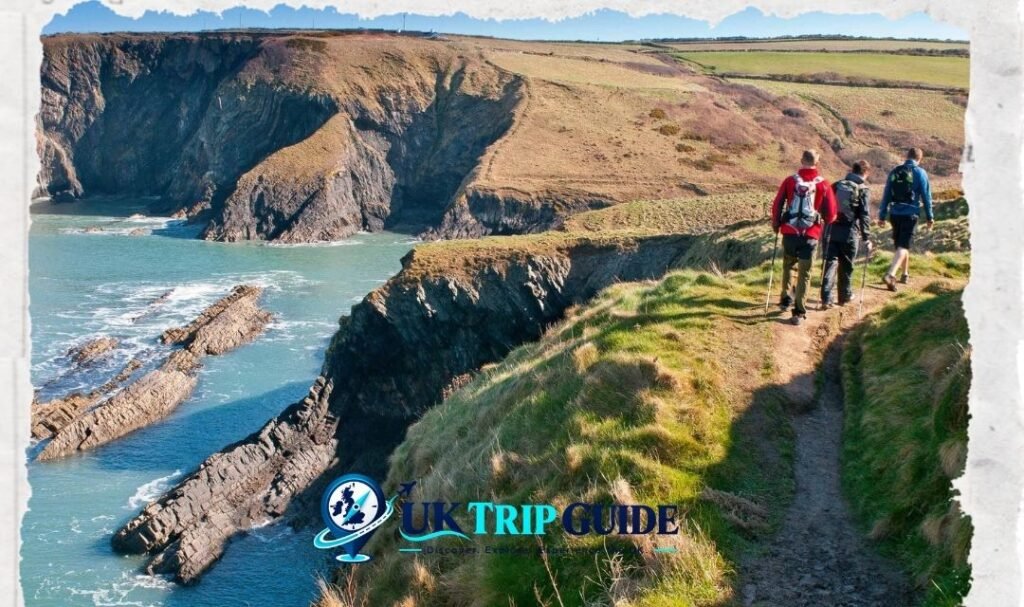
Why Explore the UK Coast on Foot?
Driving along the coast is beautiful, but walking lets you experience it properly.
You notice small coves that cannot be seen from the road. You hear seabirds above the cliffs, smell the sea air and discover viewpoints that cars simply cannot reach.
Walking also gives you freedom.
You do not need to complete an entire long-distance trail. Many famous coastal paths can be divided into short sections suitable for half-day or full-day adventures.
The South West Coast Path, for example, stretches for around 630 miles through Somerset, Devon, Cornwall and Dorset, but visitors can simply choose one beautiful section for a weekend walk.
The same approach works elsewhere around Britain.
Here are 15 coastal walks worth putting on your UK bucket list.
1. Seven Sisters, East Sussex
The Seven Sisters provide one of England’s most recognisable coastal landscapes.
Huge white chalk cliffs rise above the English Channel, with green grass covering the tops and turquoise-blue water below on clear days.
Walking here feels very different from a typical seaside promenade.
A popular experience is exploring the coast around Cuckmere Haven, Birling Gap and the Seven Sisters.
You can choose shorter sections or create a much longer hike depending on your fitness and transport arrangements.
The constant rise and fall over the chalk hills makes the terrain more demanding than photographs may suggest.
The views are worth the effort.
On a clear day, white cliffs disappear into the distance while the sea stretches across the entire horizon.
VisitBritain includes Seven Sisters within the England Coast Path’s spectacular south-coast landscapes.
Best for: Photography, couples and experienced casual walkers.
Difficulty: Moderate to challenging depending on distance.
Best time: April to September.
Important: Chalk cliffs can collapse without warning. Stay well back from cliff edges rather than walking directly beside them.
2. Lulworth Cove to Durdle Door, Dorset
Few coastal landmarks in England are as famous as Durdle Door.
The enormous natural limestone arch stands in the sea along Dorset’s Jurassic Coast.
Beginning around Lulworth Cove allows walkers to experience two beautiful landscapes during one relatively short outing.
The walk climbs steeply from the cove before following the coastline towards Durdle Door.
This is not a flat beach stroll.
There are steep sections, and returning requires another climb.
But the higher ground provides excellent views across the Jurassic Coast.
Take your time at Durdle Door rather than immediately turning around.
The beach and surrounding cliffs can be spectacular when conditions are good.
Best for: Couples, photography and shorter coastal adventures.
Difficulty: Moderate.
Best time: Spring through early autumn.
3. St Ives to Zennor, Cornwall
Cornwall contains some of the Best Coastal Walks in the UK, and the coast west of St Ives is particularly impressive.
Leaving the artistic seaside town behind, the landscape quickly becomes wilder.
Rocky headlands, small coves and open Atlantic views dominate the route towards Zennor.
This is not a casual promenade.
Sections can be rough, rocky and tiring, especially after rain.
Walkers should wear proper footwear and carry enough food and water.
The reward is a much wilder side of Cornwall than you will see around busy harbour streets.
Once you reach Zennor, the traditional village atmosphere provides a wonderful contrast to the rugged coast.
Best for: Experienced walkers, couples and Cornwall adventures.
Difficulty: Challenging.
Best time: May, June and September.
4. Tintagel to Boscastle, Cornwall
North Cornwall’s coastline is famous for drama.
High cliffs, deep valleys and Atlantic waves create spectacular scenery between Tintagel and Boscastle.
Tintagel’s connections with the legends of King Arthur give the area an almost mythical atmosphere.
Once you leave the village, however, nature becomes the main attraction.
The coastal path climbs and descends repeatedly as it follows the cliffs.
Boscastle makes a beautiful finishing point, with its narrow natural harbour surrounded by steep hills.
Because this is a linear route, plan your return transport before beginning.
Best for: History lovers, photographers and serious walkers.
Difficulty: Moderate to challenging.
Best time: Late spring through early autumn.
5. Craster to Dunstanburgh Castle, Northumberland
Not every great coastal walk needs to be exhausting.
The walk from Craster towards Dunstanburgh Castle combines relatively accessible walking with one of England’s most dramatic coastal landmarks.
The ruined castle appears ahead as you travel beside the sea.
Fields, rocky coastline and wide North Sea views surround the route.
This makes it particularly enjoyable for families with older children and couples who want scenery without committing to an entire day of difficult hiking.
Craster itself provides a pleasant starting or finishing point.
If you have more energy, continue farther along the Northumberland coast rather than immediately returning.
Best for: Couples, families, history and photography.
Difficulty: Easy to moderate.
Best time: April to October.
6. Robin Hood’s Bay to Whitby, North Yorkshire
Yorkshire’s coastline provides a completely different walking atmosphere.
Robin Hood’s Bay is a beautiful old village where narrow streets descend steeply towards the sea.
From there, walkers can follow the coast north towards Whitby.
Clifftop scenery accompanies much of the journey before Whitby’s famous abbey ruins and town eventually appear.
Finishing in Whitby is part of what makes the route enjoyable.
After several hours of walking, cafés, pubs and traditional fish and chips provide plenty of motivation to reach the end.
The Yorkshire coast can be exposed to strong winds, so conditions should always be checked before departure.
Best for: Couples, history, seaside weekends and full-day walkers.
Difficulty: Moderate.
Best time: May to September.
7. Holkham to Wells-next-the-Sea, Norfolk
Coastal walking does not always mean climbing cliffs.
Norfolk offers a much flatter landscape of huge beaches, sand dunes, salt marshes and wide skies.
Holkham Beach is especially impressive.
Its enormous stretches of sand create a feeling of space that is completely different from Cornwall or Dorset.
Walking towards Wells-next-the-Sea allows you to combine natural scenery with a traditional coastal town.
Colourful beach huts add character closer to Wells.
This can be an excellent choice for families or travellers who prefer flatter walks.
VisitBritain highlights the Norfolk coast for its golden beaches, harbour communities and wildlife-rich dunes.
Best for: Families, beginners, wildlife and beach lovers.
Difficulty: Easy to moderate.
Best time: Spring through autumn.
8. St Davids and the Pembrokeshire Coast, Wales
Pembrokeshire contains some of Britain’s finest coastal walking.
The Pembrokeshire Coast Path follows cliffs, beaches, coves and small communities along one of Wales’s wildest shorelines.
Rather than attempting the entire trail, base yourself around St Davids and choose a manageable section.
Whitesands Bay and surrounding coastline provide beautiful possibilities.
Expect sea cliffs, open views and beaches that can feel wonderfully remote.
The route also provides opportunities to spot seabirds and other wildlife.
VisitBritain highlights the Pembrokeshire Coast Path for its dramatic cliffs and golden beaches.
Best for: Nature lovers, couples, photographers and serious walkers.
Difficulty: Moderate, depending on section.
Best time: May to September.
9. Rhossili Bay and Worm’s Head, Gower
Rhossili provides one of the most impressive coastal views in Wales.
From the cliffs above, the huge sandy bay stretches far into the distance.
Walking along the headland gives you constantly changing views of the beach and Atlantic Ocean.
Worm’s Head adds another adventure, but access is affected by tides.
Never attempt to cross a tidal section without knowing the safe access window and allowing enough time to return.
Even if you do not continue onto the tidal headland, walking around Rhossili itself is worth the journey.
Sunset can be especially beautiful.
Best for: Couples, photography and dramatic sea views.
Difficulty: Easy to moderate around the main headland; additional care required for tidal sections.
Best time: April to September.
10. South Stack, Anglesey
Anglesey is surrounded by excellent coastal walking.
South Stack is one of its most dramatic areas.
High cliffs drop towards the Irish Sea while the lighthouse creates a memorable focal point below.
Seabirds are another reason to visit, particularly during nesting seasons.
The surrounding Isle of Anglesey Coast Path can be explored in small sections, so you do not need to commit to a long-distance walk.
Wind can be strong around exposed headlands.
Wear layers and take additional care near cliffs.
Best for: Wildlife, photographers and North Wales road trips.
Difficulty: Moderate.
Best time: Spring and summer.
11. Llanddwyn Island, Anglesey
For a gentler Anglesey experience, choose Llanddwyn.
The journey begins around a beautiful sandy coastline before continuing towards a narrow tidal island filled with sea views and historic remains.
The landscape combines forest, mountains, beach and open water.
On clear days, the distant mountain scenery of North Wales makes the setting even more impressive.
Llanddwyn is associated with Santes Dwynwen, the Welsh patron saint of lovers, which gives the location additional appeal for couples.
Always check local tide information before travelling.
Best for: Couples, families, beaches and photography.
Difficulty: Easy to moderate.
Best time: May to September.
12. Fife Coastal Path, Scotland
Scotland’s coast is not only about remote Highland cliffs.
Fife offers beautiful seaside walking within easier reach of Edinburgh.
The Fife Coastal Path passes through fishing communities, beaches and open coastline.
Rather than walking the entire long-distance route, choose a section connecting some of the East Neuk villages.
Areas around Elie, St Monans, Pittenweem and Anstruther are especially attractive for a relaxed coastal day.
Fishing harbours and traditional buildings give the walk plenty of character.
Stopping for food in one of the villages can become part of the experience.
Best for: Couples, food lovers and relaxed coastal weekends.
Difficulty: Easy to moderate depending on section.
Best time: April to September.
13. Neist Point, Isle of Skye
Neist Point provides the kind of scenery people travel to Skye hoping to find.
Huge cliffs rise above the Atlantic while a lighthouse stands on the remote headland.
The main walk is relatively short compared with many routes in this guide, but steep terrain makes it more demanding than distance alone suggests.
Weather can change rapidly.
Clear skies can disappear into mist, rain and strong wind surprisingly quickly.
Stay safely back from exposed cliff edges and do not take unnecessary risks for photographs.
For couples and photographers travelling around Skye, Neist Point can become one of the highlights of the island.
Best for: Photography, couples and Scottish road trips.
Difficulty: Moderate.
Best time: May to September.
14. Causeway Coast, Northern Ireland
Northern Ireland’s Causeway Coast provides one of the most distinctive walking landscapes in the UK.
Basalt cliffs, rocky headlands and Atlantic views create dramatic scenery along County Antrim.
The Giant’s Causeway is the best-known landmark, but walking allows you to experience much more than the famous stones.
Choose a section of the wider coastal route rather than simply arriving at one viewpoint and leaving.
The cliffs above the coast can provide excellent views, while surrounding countryside gives the area a wild feeling.
Weather can be unpredictable, so waterproof clothing is useful throughout much of the year.
Best for: Geology, photography, couples and Northern Ireland road trips.
Difficulty: Moderate depending on route.
Best time: May to September.
15. Bamburgh Coast, Northumberland
Few beach walks have a backdrop as impressive as Bamburgh.
The enormous castle rises above the Northumberland coast while a wide sandy beach stretches below.
A long walk along the sand can be enjoyable even for travellers who do not consider themselves hikers.
On clear days, the combination of sea, dunes and castle creates outstanding photography opportunities.
You can extend your walk towards surrounding stretches of coastline or keep things simple with a return stroll along the beach.
VisitBritain highlights Bamburgh for its combination of golden sand and hilltop castle.
Best for: Families, couples, photography and easy seaside walks.
Difficulty: Easy.
Best time: April to October.
Best Coastal Walks in the UK for Beginners
You do not have to be an experienced hiker to enjoy Britain’s coast.
Holkham to Wells-next-the-Sea is one of the easiest choices because the terrain is relatively flat.
Bamburgh Beach is another excellent option.
You can decide how far you want to walk and turn around whenever you are ready.
The route towards Dunstanburgh Castle from Craster provides slightly more adventure without requiring a major mountain-style hike.
Llanddwyn on Anglesey is also suitable for many casual walkers when conditions are good.
Beginners should focus on comfortable distances rather than famous route names.
A beautiful four-mile walk enjoyed properly is far better than struggling through twelve miles simply to say you completed it.
Best Coastal Walks for Couples
The UK’s coastline is perfect for romantic walking weekends.
Seven Sisters provides dramatic white cliffs and huge sea views.
Llanddwyn offers a meaningful romantic connection alongside beautiful Welsh scenery.
St Ives to Zennor is excellent for active couples visiting Cornwall.
The Fife coast combines walking with pretty Scottish fishing villages.
For something less demanding, Bamburgh gives couples miles of beach with an extraordinary castle backdrop.
Plan an overnight stay nearby so your walk does not need to be rushed around a long journey home.
Best Coastal Walks for Families
Families usually benefit from shorter, flexible routes.
Holkham and Wells provide beaches and plenty of space.
Bamburgh is excellent because children can enjoy the sand as well as the walk.
Craster and the surrounding Northumberland coast provide history and scenery in the same outing.
Llanddwyn can also create an adventurous family day in good conditions.
Choose routes based on the youngest person’s ability.
A child who enjoys a three-mile coastal adventure may hate an eight-mile walk with steep climbs.
Best Coastal Walks for Photography
Seven Sisters is one of Britain’s most photogenic stretches of coast.
Durdle Door offers a famous natural arch surrounded by Jurassic Coast scenery.
Rhossili provides enormous views across beach and sea.
Neist Point is excellent for dramatic Scottish landscape photography.
The Causeway Coast offers completely different colours, geology and rock formations.
For the best light, consider walking early in the morning or later in the afternoon.
However, safety must always be more important than getting the perfect photograph.
Never move closer to an unstable cliff edge because you want a slightly better angle.
When Is the Best Time for UK Coastal Walking?
Spring is one of the best seasons.
April and May bring longer days, coastal flowers and generally fewer visitors than peak summer.
June offers some of the longest daylight hours of the year.
This is particularly useful for longer walks.
July and August can provide warm conditions, but famous destinations can become crowded.
September is another excellent month.
Summer crowds often reduce while daylight remains good enough for many longer routes.
Autumn and winter coastal walks can be spectacular but require extra preparation.
Strong winds, heavy rain, slippery paths and short daylight hours can turn an easy summer walk into something much more difficult.
What to Pack for a UK Coastal Walk
Start with comfortable footwear.
Proper walking shoes or boots are particularly important on rough paths.
Carry a waterproof jacket even when the morning looks sunny.
Coastal weather changes quickly.
Bring enough water and food for your planned distance.
A fully charged phone and portable charger are useful for navigation and emergencies.
Sunscreen is important during summer because strong sea breezes can make you underestimate sun exposure.
For longer or remote walks, downloading an offline map before leaving is sensible.
And always carry an extra layer. Coastal wind can make temperatures feel much colder than expected.
Coastal Walking Safety Tips
Cliffs deserve enormous respect.
Erosion can make edges unstable even when the ground appears solid.
Stay back from the edge and follow warning signs.
Do not climb over fences or barriers to take photographs.
Check tide times before walking around tidal islands, beaches beneath cliffs or headlands where the sea can cut off your return route.
Never assume yesterday’s safe path will be identical today.
Heavy rain, storms and coastal erosion can change conditions.
Tell someone your route when heading into remote areas.
Finally, turn around when conditions become uncomfortable.
Finishing the route is never more important than getting home safely.
How to Plan a Coastal Walking Weekend
Choose one main walk rather than filling both days with difficult hikes.
For example, spend Saturday completing your longer route and Sunday exploring a nearby seaside town.
In Cornwall, combine a coastal path section with St Ives.
In Northumberland, walk around Dunstanburgh before spending time in Bamburgh.
In Wales, combine a Pembrokeshire walk with St Davids or Tenby.
In Northern Ireland, build your walk into a longer Causeway Coast trip.
This creates a much more balanced weekend.
Are Coastal Walks Expensive?
Walking itself is one of the most affordable ways to explore the UK.
Many coastal paths can be enjoyed without admission charges.
Your main costs are likely to be transport, parking, food and accommodation.
Packing lunch can reduce spending considerably on longer walking days.
Public transport can also be useful for linear routes because you can walk from one town to another without returning to your starting point.
Always check services before departure, particularly on Sundays and outside summer.
Responsible Coastal Walking
The UK’s coastline contains sensitive habitats as well as working communities.
Stay on recognised paths where requested.
Keep dogs under control, particularly around livestock and nesting birds.
Take rubbish away with you.
Avoid disturbing wildlife for photographs.
Use official parking rather than blocking village streets or farm access.
Supporting local cafés, pubs and accommodation can also help the small communities through which many long-distance trails pass.
Beautiful coastlines remain beautiful when visitors treat them carefully.
Final Thoughts on the Best Coastal Walks in the UK
The Best Coastal Walks in the UK prove that you do not need to travel abroad to experience extraordinary seaside landscapes.
Seven Sisters offers brilliant white cliffs above the English Channel, while Dorset combines ancient geology with famous landmarks such as Durdle Door.
Cornwall provides rugged Atlantic adventures around St Ives and Tintagel.
Northumberland delivers castles beside huge sandy beaches, while Yorkshire combines clifftop paths with historic fishing towns.
Wales may be even harder to beat. Pembrokeshire offers wild cliffs and golden beaches, while Rhossili and Anglesey provide some of Britain’s finest sea views.
Scotland adds remote headlands and picturesque fishing villages, and Northern Ireland’s Causeway Coast provides geology unlike anywhere else on this list.
The best coastal walk is not necessarily the longest or hardest.
It is the one that gives you time to enjoy the sea, stop at viewpoints and return wanting to explore another section of Britain’s extraordinary coastline.
Frequently Asked Questions
What are the best coastal walks in the UK?
Seven Sisters, Pembrokeshire Coast, St Ives to Zennor, the Jurassic Coast, Rhossili, Anglesey, Northumberland and the Causeway Coast are among the strongest choices.
What is the best coastal walk in England?
Seven Sisters is excellent for dramatic cliffs, while Cornwall’s South West Coast Path offers a much wilder experience. Northumberland is ideal for beaches and castles.
What is the best coastal walk in Wales?
The Pembrokeshire Coast Path is one of Wales’s great walking experiences. Rhossili and the Anglesey coast are also outstanding.
What are the best coastal walks in Scotland?
The Fife Coastal Path is excellent for fishing villages and accessible day walks, while Neist Point on Skye offers much more dramatic scenery.
What is the best coastal walk in Northern Ireland?
The Causeway Coast is one of the strongest choices because it combines spectacular Atlantic scenery with distinctive basalt landscapes.
Which coastal walks are best for beginners?
Holkham to Wells, Bamburgh Beach and shorter sections around Craster are good starting points. Always check the exact route and conditions before walking.
What should I wear for a coastal walk?
Comfortable walking shoes, layered clothing and a waterproof outer layer are useful. Longer or rougher routes require more substantial walking equipment.
When is the best month for coastal walking in the UK?
May, June and September are excellent for many routes because daylight hours are generous and conditions can be comfortable for walking.
Are UK coastal walks safe for children?
Many are, provided you choose an appropriate route and supervise children carefully. Routes beside high cliffs require particular caution.
Do I need to check tides before a coastal walk?
For some routes, absolutely. Tidal islands, beaches beneath cliffs and certain headlands can become inaccessible when the tide rises. Always check local conditions when tides affect your route.
Looking for more beautiful coastlines, walking adventures, hidden villages and unforgettable destinations across Britain? Explore more at UKTripGuide.co.uk