
Most Beautiful Places in Scotland include wild Highland valleys, turquoise island beaches, peaceful lochs, dramatic mountain ranges and historic cities that look spectacular in almost every season. Scotland is one of those destinations where the journey between places can be just as memorable as the destination itself.
From Edinburgh’s atmospheric skyline to the extraordinary landscapes of the Isle of Skye and the white sands of the Outer Hebrides, Scotland offers endless opportunities for road trips, romantic escapes, photography and outdoor adventures. VisitScotland’s official guide also highlights wild beaches, sparkling lochs and dramatic landscapes among the country’s greatest beauty spots. VisitScotland’s official beautiful places guide
This guide explores some of the Most Beautiful Places in Scotland that everyone should try to experience at least once.
Why Scotland Is So Beautiful
Scotland’s beauty comes from variety.
The Highlands can feel enormous and almost empty, with mountains rising beside narrow roads and dark lochs. Travel west and the landscape breaks apart into islands, beaches and rocky coastline.
Further south, cities such as Edinburgh mix dramatic architecture with hills and sea views, while forest parks provide peaceful alternatives to the country’s famous mountain destinations.
Even Scotland’s weather contributes to its appearance.
Clouds moving across mountains can transform an ordinary view within minutes. A loch that appears dark and mysterious in the morning may become bright blue when sunlight breaks through later in the day.
VisitScotland highlights everything from Highland mountains and Glencoe to beaches in the Outer Hebrides as standout examples of the country’s landscapes.
1. Isle of Skye
The Isle of Skye is one of Scotland’s most spectacular destinations.
Sharp mountains, unusual rock formations, waterfalls, cliffs and winding roads make almost every part of the island worth photographing.
The Quiraing is one of Skye’s most famous landscapes. Huge slopes, cliffs and rocky pinnacles create scenery that can feel almost unreal.
The Old Man of Storr is another iconic location.
Travellers should also look beyond the most famous viewpoints. Talisker Bay, the Sleat Peninsula and quieter coastal roads can provide equally memorable experiences. VisitScotland describes Skye as an island filled with dramatic coastline, mountain ranges and numerous natural attractions.
Do not attempt to see the whole island in one day.
Stay for at least two or three nights.
Best for: Photography, couples, hiking and road trips.
2. Glencoe
Glencoe is the Scotland many travellers dream about before they arrive.
The road passes through a deep Highland valley surrounded by enormous mountains.
Clouds often hang around the peaks, creating an incredibly dramatic atmosphere.
You do not have to complete a difficult mountain walk to appreciate Glencoe.
Several viewpoints allow travellers to stop safely and enjoy the landscape, while lower-level trails provide opportunities for easier walks.
The glen was shaped by ancient volcanic activity and glaciers, giving it the huge scale visible today.
Visit early in the morning or stay nearby if you want to experience the valley more peacefully.
Best for: Road trips, photographers, walkers and couples.
3. Edinburgh
Natural scenery is not the only reason Scotland is beautiful.
Edinburgh is one of Britain’s most atmospheric cities.
Historic stone buildings rise along steep streets while Edinburgh Castle dominates the skyline.
The Old Town provides narrow closes and centuries-old architecture, while the elegant New Town offers a completely different style.
For one of the best city views, head towards Calton Hill.
From there, Edinburgh’s rooftops, monuments and surrounding landscape stretch into the distance.
The city can look particularly impressive around sunset when warm evening light catches its stone buildings.
Best for: History, couples, photography and first-time visitors.
4. Luskentyre Beach, Isle of Harris
You could easily mistake photographs of Luskentyre for somewhere much farther south.
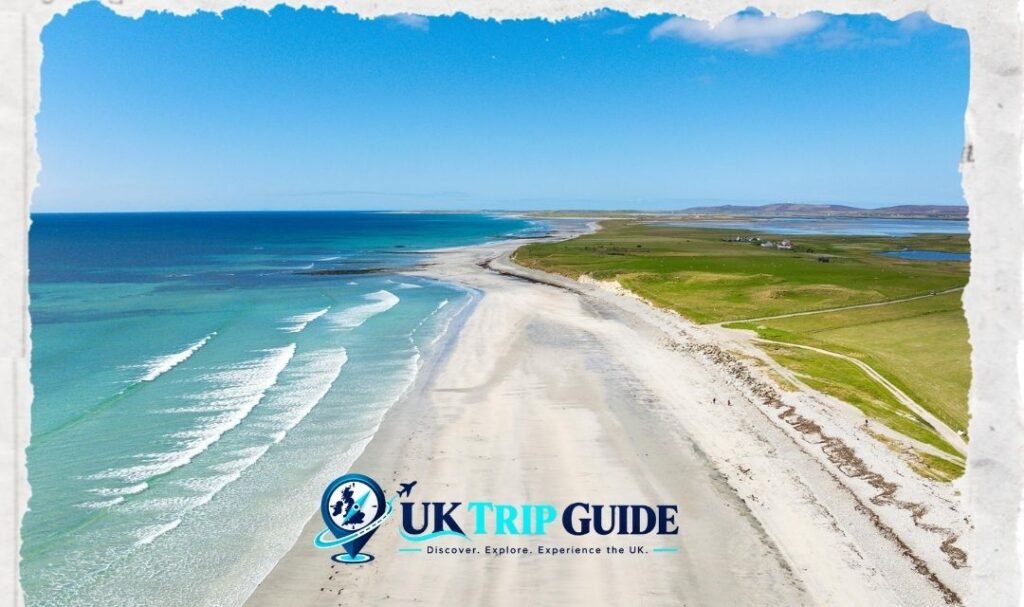
White sand meets clear turquoise and green-blue water on the Isle of Harris in the Outer Hebrides.
The surrounding mountains make the setting even more unusual.
VisitScotland describes Luskentyre as a sweeping white-sand beach with striking blue-green water and panoramic views.
The weather will determine what kind of beach day you experience.
On a bright day, the colours can look tropical. On a cloudy day, the landscape becomes wild and dramatic.
Both are beautiful.
Best for: Beaches, photography, couples and island adventures.
5. Loch Lomond
Loch Lomond provides an easier introduction to Scottish scenery than many remote Highland destinations.
It lies within Loch Lomond & The Trossachs National Park and can be reached relatively easily from Glasgow.
The national park includes 22 lochs as well as mountains, forests, rivers and walking trails.
Luss is one of the best-known villages beside the loch and can make a pleasant starting point.
Walkers may prefer viewpoints such as Conic Hill.
Couples looking for a quieter break can stay near the water and build the trip around relaxing walks rather than long driving days.
Best for: Couples, families, walking and short Scotland breaks.
6. Torridon
Torridon is for travellers who want to experience the wilder side of Scotland.
Located in Wester Ross, the region contains some of the Highlands’ most striking mountain scenery.
Huge peaks rise above lochs and quiet roads, making the landscape feel remote even by Highland standards.
The Torridon area has also recently gained National Nature Reserve status, protecting around 5,100 hectares stretching from Loch Torridon towards mountains including Beinn Alligin and Liathach.
Torridon works particularly well as part of a longer Highlands road trip.
Do not rush through simply because your navigation says the next destination is only a certain number of miles away.
Stop and enjoy the landscape.
Best for: Experienced walkers, road trips and landscape photography.
7. Loch Ness
Loch Ness may be famous for a monster nobody can reliably find, but the landscape itself is reason enough to visit.
The long, deep loch stretches through the Highlands southwest of Inverness.
Forested hills and open countryside surround its dark water.
Several viewpoints can be included during a Highland road trip.
You do not need to spend the entire day searching for Nessie.
Enjoy the landscape, take a walk and use Inverness as a convenient base if you want easier accommodation and transport.
Best for: Families, first-time Highlands visitors and road trips.
8. Glenfinnan
Glenfinnan is one of Scotland’s most recognisable Highland locations.
Its curved railway viaduct crosses a valley surrounded by mountains near the head of Loch Shiel.
Film fans may recognise the scenery from the Harry Potter movies, but the landscape is worth visiting even if you have never seen them.
The area can become extremely busy when visitors gather to watch trains cross the viaduct.
Use official parking areas and never leave a vehicle somewhere unsafe simply to get a photograph.
Allow time to appreciate Loch Shiel and the surrounding landscape as well.
Best for: Photography, railway enthusiasts, families and film fans.
9. Cairngorms National Park
The Cairngorms feels different from the western Highlands.
Mountains, forests, rivers and lochs come together across a huge area.
Aviemore is one of the most convenient bases for first-time visitors.
Nearby, Loch Morlich provides a particularly unusual scene: a sandy freshwater beach backed by forests and mountains.
The national park works in every season.
Summer suits walking, cycling and waterside activities, while winter can transform the mountains with snow.
Always choose mountain routes that match your experience and current conditions.
Best for: Families, wildlife, outdoor adventures and longer stays.
10. Assynt
Assynt in northwest Scotland offers some of the country’s most unusual mountain landscapes.
Instead of one continuous mountain range, individual peaks rise dramatically from open moorland dotted with lochs.
Suilven is among the area’s most recognisable mountains.
Driving through Assynt can feel like entering an almost empty wilderness.
That remoteness is precisely what makes it so beautiful.
Fuel stations and other services are less frequent than in busy tourism areas, so plan ahead.
Best for: Remote road trips, hikers and photographers.
11. Isle of Mull
Mull combines island scenery, mountains, wildlife and colourful coastal communities.
Tobermory is the island’s best-known settlement.
Its brightly coloured waterfront buildings create one of Scotland’s prettiest harbour scenes.
Beyond Tobermory, roads lead through quieter landscapes with sea views and mountainous backdrops.
Mull is especially attractive to wildlife lovers.
Give yourself several nights instead of trying to treat the island as a rushed excursion.
Best for: Wildlife, couples, road trips and photography.
12. Isle of Iona
Iona is small, peaceful and completely different from the dramatic mountain landscapes elsewhere in Scotland.
The island lies just off Mull and is known for its historical and spiritual importance.
Yet its natural beauty deserves equal attention.
Small beaches, clear water and open coastal scenery create a wonderfully peaceful atmosphere. VisitScotland includes Iona among its most beautiful Scottish places and highlights its northern bays and beaches.
This is a destination for slow travel.
Walk rather than rush.
Best for: Peaceful escapes, couples, history and island scenery.
13. Yesnaby, Orkney
Scotland’s far north contains landscapes that look very different from the Highlands.
Yesnaby on Orkney’s west coast is a perfect example.
Sea cliffs and rock stacks face the Atlantic, creating spectacular views when waves crash against the coastline.
VisitScotland highlights the Yesnaby Castle sea stack as one of Scotland’s particularly beautiful coastal formations.
Stay well away from cliff edges, especially in strong winds.
The landscape is impressive without taking unnecessary risks for a photograph.
Best for: Coastal scenery, wildlife and photography.
14. Bow Fiddle Rock, Moray
Bow Fiddle Rock is one of northeast Scotland’s most interesting coastal landmarks.
The huge natural sea arch sits just offshore at Portknockie.
Its unusual shape has been created by the sea constantly working against the rock.
Walking along the nearby coastline provides several different viewpoints.
VisitScotland includes Bow Fiddle Rock among its recommended Scottish beauty spots and notes the surrounding trails and seabirds.
Late afternoon can provide particularly attractive coastal light.
Best for: Photography, coastal walks and northeast road trips.
15. Loch Katrine and The Trossachs
Loch Katrine offers classic Scottish scenery within relatively easy reach of the central belt.
Forested slopes and hills surround the long stretch of water.
Walking and cycling provide peaceful ways to experience the area.
It also works well for travellers who do not have enough time to drive far into the Highlands.
Combine Loch Katrine with Loch Lomond and nearby Trossachs scenery for a relaxing two- or three-night trip.
Best for: Couples, cycling, gentle outdoor trips and photography.
16. Isle of Arran
Arran is a brilliant choice for travellers wanting a taste of island Scotland.
The north of the island has mountains, while the coastline provides beaches and attractive villages.
Because the island packs several different landscapes into a relatively manageable area, it is particularly suitable for a short island break.
Driving gives you flexibility, but cycling and walking are also popular.
Allow at least two nights.
Island travel becomes much more enjoyable when ferry times are not controlling every hour of your day.
Best for: Couples, families, cycling and island escapes.
17. Glen Nevis and Ben Nevis
Ben Nevis is the highest mountain in the UK, but you do not need to climb to its summit to enjoy this region.
Glen Nevis below provides enormous mountain scenery with far less commitment.
Fort William makes a useful base.
From there, visitors can explore the glen, take shorter walks and enjoy views towards the surrounding mountains.
Climbing Ben Nevis itself is a serious mountain day and should only be attempted with suitable preparation, clothing, footwear and weather conditions.
There is no shame in enjoying the mountain from below.
Best for: Mountain scenery, experienced hikers and road trips.
18. Galloway Forest Park
Southern Scotland is often overlooked by travellers rushing directly towards Edinburgh and the Highlands.
Galloway Forest Park shows why that can be a mistake.
Forests, lochs and quiet roads make it a peaceful destination during the day.
At night, the area becomes even more special.
VisitScotland describes Galloway as the UK’s largest forest park and an outstanding dark-sky destination with exceptionally dark night skies.
On a clear night, stargazing can become one of the most memorable experiences of your trip.
Best for: Stargazing, families, couples and quiet nature breaks.
Best Beautiful Places in Scotland for Couples
Scotland is an excellent romantic destination.
The Isle of Skye suits adventurous couples who enjoy road trips and dramatic scenery.
Loch Lomond is easier for a shorter, more relaxing break.
Glencoe provides unforgettable mountain landscapes, while Edinburgh combines romantic streets with restaurants and comfortable hotels.
For something quieter, consider Iona, Mull or Arran.
The best couples’ trip is usually not the itinerary with the greatest number of destinations.
Choose fewer places and stay longer.
Most Beautiful Places in Scotland for Photography
Photographers could spend months travelling around Scotland.
Skye provides mountain formations and coastline.
Glencoe is excellent for dramatic weather.
Luskentyre offers beaches and remarkable colours.
Torridon and Assynt provide remote Highland landscapes, while Edinburgh adds architecture and city views.
Always allow extra time.
The weather and light can transform a location quickly, and the best photograph may appear long after you originally intended to leave.
Best Scenic Scotland Road Trip
For a first road trip, a route combining cities and Highlands works particularly well:
Edinburgh → Loch Lomond → Glencoe → Glenfinnan → Isle of Skye → Loch Ness → Cairngorms → Edinburgh
Seven days is possible, but ten days is much better.
If you have two weeks, add Torridon or parts of the northwest Highlands.
Island destinations such as Mull, Arran and the Outer Hebrides are better treated as their own trips rather than squeezed into an already packed route.
Best Time to See Scotland’s Beautiful Places
Spring is excellent for road trips.
April and May bring longer days while many locations remain quieter than during the main summer period.
Summer offers extremely long daylight hours, particularly in northern Scotland.
That makes June through August ideal for island trips and long outdoor days, although popular destinations such as Skye can become busy.
September is one of the best all-round choices.
Autumn colours begin appearing while some summer crowds decrease.
Winter can be spectacular, but short daylight hours and difficult mountain weather require more careful planning.
Scotland Travel Tips for First-Time Visitors
Do not underestimate driving times.
Highland roads are often narrow and winding.
Single-track roads require patience. Use passing places properly and never park in them.
Fill your fuel tank before travelling into particularly remote regions.
Download maps before leaving areas with reliable mobile coverage.
Pack waterproof clothing even if the morning forecast looks promising.
For mountain walking, choose routes based on your ability rather than how impressive the summit photographs look.
And leave room for spontaneous stops.
Scotland is full of viewpoints that you will never find on a strict itinerary.
How Many Days Do You Need in Scotland?
Three days are enough for Edinburgh and one nearby countryside destination.
Seven days allow a good introduction to Edinburgh and the Highlands.
Ten days make it much easier to add Skye without rushing.
Two weeks provide the freedom to explore the Highlands properly or include an island.
Travellers planning the Outer Hebrides, Orkney or several islands should consider a longer trip.
Ferry journeys and changing weather make flexibility particularly valuable.
Final Thoughts on the Most Beautiful Places in Scotland
The Most Beautiful Places in Scotland demonstrate why the country deserves far more than a quick weekend visit.
Skye offers extraordinary mountains and coastline, while Glencoe provides some of the Highlands’ most dramatic scenery.
Luskentyre proves that Scottish beaches can compete with almost anywhere for beauty, and Loch Lomond provides a more accessible countryside escape.
Torridon and Assynt reveal Scotland at its wildest, while Mull, Iona, Arran and Orkney show just how varied the islands can be.
Even Edinburgh belongs among Scotland’s great scenic destinations because its historic skyline and surrounding hills create views you simply do not find in an ordinary city.
The best way to experience Scotland is slowly.
Drive fewer miles. Stop more often. Walk when you can and give changing weather time to reveal a completely different landscape.
You may arrive with one favourite place in mind and leave loving somewhere you had never even heard of before.
Frequently Asked Questions
What are the most beautiful places in Scotland?
The Isle of Skye, Glencoe, Luskentyre Beach, Loch Lomond, Torridon, Assynt and the Cairngorms are among Scotland’s most spectacular natural destinations.
What is the most beautiful part of the Scottish Highlands?
Glencoe is excellent for first-time visitors, while Torridon and Assynt provide wilder and more remote landscapes.
What is Scotland’s most beautiful island?
Skye is the most famous choice for mountain scenery, but Harris is extraordinary for beaches, while Mull and Arran offer excellent all-round island experiences.
What is the prettiest beach in Scotland?
Luskentyre Beach on Harris is one of the strongest contenders because of its white sand, turquoise water and mountain views.
Where should first-time visitors go in Scotland?
Edinburgh, Glencoe, Isle of Skye and Loch Ness create an excellent first itinerary. Add the Cairngorms if you have more time.
Is Scotland better by car or train?
Cities such as Edinburgh and Glasgow are easy without a car. A car gives much greater freedom in the Highlands, although rail journeys can also provide beautiful scenery.
How many days should I spend in Scotland?
Seven days provide a useful introduction, while ten to fourteen days are much better for combining cities, Highlands and islands.
What month is best for visiting Scotland?
May, June and September are excellent for many travellers because there is plenty of daylight for exploring and road trips.
Is the Isle of Skye worth the long drive?
Yes. Skye offers some of Scotland’s most distinctive scenery, but you should stay for at least two or three nights rather than rushing around it in one day.
Where can I find beautiful places in Scotland without huge crowds?
Torridon, Galloway Forest Park, Iona and parts of Assynt can offer quieter experiences, although visitor levels vary by season and weather.
Looking for more beautiful Scottish escapes, road trips, islands and unforgettable destinations across Britain? Explore more at UKTripGuide.co.uk